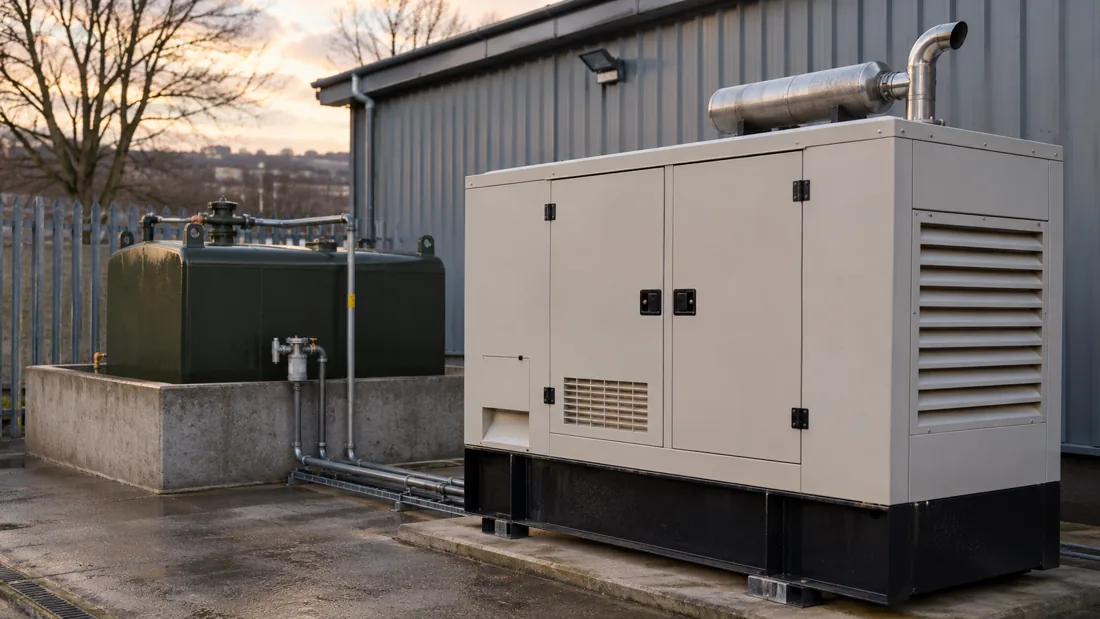
Start With What The Generator Supports
Generator removal begins with the role of the equipment. A standby set can serve an occupied building even if it rarely runs. Confirm whether it is redundant, being replaced or moving to another location, and identify the person who can authorise its withdrawal from service.
A commercial generator is connected to more than its fuel tank. Electrical interfaces, control circuits, exhaust arrangements and sometimes a separate day tank all affect the scope. Record what is to remain and what must leave, so a quotation does not describe only the engine while overlooking the installation around it.
Removal For Disposal Or Relocation?
Disposal and relocation have different requirements. If the set may be reused, its identity, operating condition and maintenance history matter to the receiving party. Dismantling that is acceptable for disposal may be unsuitable for a unit intended for another site.
A replacement project also needs a continuity plan. The existing set should not be retired until the responsible person has accepted the alternative arrangement. Tell us whether there is another source of backup power and whether a commissioning contractor is managing the new equipment.
If the generator has failed, describe the fault without attempting to prove that it can run. A seized engine, damaged enclosure or unknown condition can affect lifting and handling. Photographs and a readable manufacturer plate help establish the starting point, but a survey may still be needed.
Fuel, Fluids And Connected Tanks
A sub-base tank may contain diesel even when the gauge suggests little remains. Some installations also have a bulk supply tank, transfer pump or return pipe. Identify each part of the fuel system and whether the bulk tank is staying in service for other equipment.
Usable fuel may be recoverable if its condition and destination are appropriate. Contaminated fuel and waste fluids need separate handling decisions. The amount present affects recovery equipment, temporary storage and disposal arrangements, so a recent reading is more useful than the original tank capacity alone.
Ask the quotation to address engine oil, coolant and batteries where relevant, rather than assuming these follow the same waste route as scrap metal. Do not drain fluids, disconnect batteries or disturb fuel connections to prepare for collection. Preparation belongs within the agreed specialist method.
Electrical Separation And Safe Access
Electrical disconnection must be managed by competent authorised personnel as part of the site plan. A generator can have automatic start controls and connections to a building system. This page is not an isolation procedure, and a stopped engine should not be taken as proof of safe electrical separation.
For an indoor set, record door dimensions, corridor turns, thresholds and the route to the loading position. The enclosure may have been assembled before the building was completed. Exhaust penetrations, ventilation fittings and structural openings can require separate enabling works.
Outdoor removal needs a suitable standing area and an assessed lift route. Include overhead cables, canopies, neighbouring equipment and any shared yard restrictions. A crane can require more usable space than the generator footprint suggests, especially where the set is positioned behind another building.
The Removal Programme And Cost
A useful programme separates approval to retire the set, electrical and fuel preparation, physical handling and collection. If another contractor is performing disconnections, agree the point at which the equipment can be handed over. The removal team needs reliable confirmation rather than assumptions about who completed the preparation.
Cost drivers include the set dimensions and weight, attached tank contents, internal access and lifting reach. Disassembly, temporary removal of building fabric, traffic management and restricted working hours may add further scope. State whether the quote should include exhausts, supports, fuel lines and base making good.
A reused generator also needs an agreed delivery destination and acceptance arrangements. Removal does not automatically include installation, testing or commissioning at another premises. Any proposed sale or salvage value is a separate matter and should not be assumed to cover the removal cost.
Prepare A Clear Equipment File
Send the site postcode, manufacturer, model, available weight information and photographs of the plate and complete unit. Add views of fuel connections, enclosure, loading area and the route between them. Identify the equipment owner and any contractor already appointed to disconnect the system.
At handover, retain a record identifying the removed set and its destination, together with applicable waste records for discarded equipment and fluids. Where the unit is relocating, the receiving party may also need maintenance documents and handling information. Confirm these requirements before collection.
Update the premises asset register and drawings so a retired generator is not still treated as available backup. The facilities contact should know which redundant pipes or openings remain and who will close them. A tidy handover needs a defined final condition, not simply an empty space where the engine stood.
Your Questions Answered
Can You Remove The Generator And Fuel Tank Together?
Generator and fuel tank removal can form one coordinated scope when their connections, contents and handling routes have been assessed. State whether the tank is integral, adjacent or a separate bulk store. The electrical interfaces still need competent isolation, and the quotation should distinguish equipment removal from building repairs or replacement commissioning.
Will A Generator Fit Through The Existing Door?
Generator access depends on the full equipment dimensions and the route out, rather than the door width alone. Enclosures, bends, low beams and thresholds can change the handling method. Send photographs and existing drawings without dismantling anything. A site survey can establish whether specialist handling or separate enabling works are needed.
Planning references: HSE confined spaces, DSEAR guidance, business waste responsibilities. Requirements depend on the assessed work.