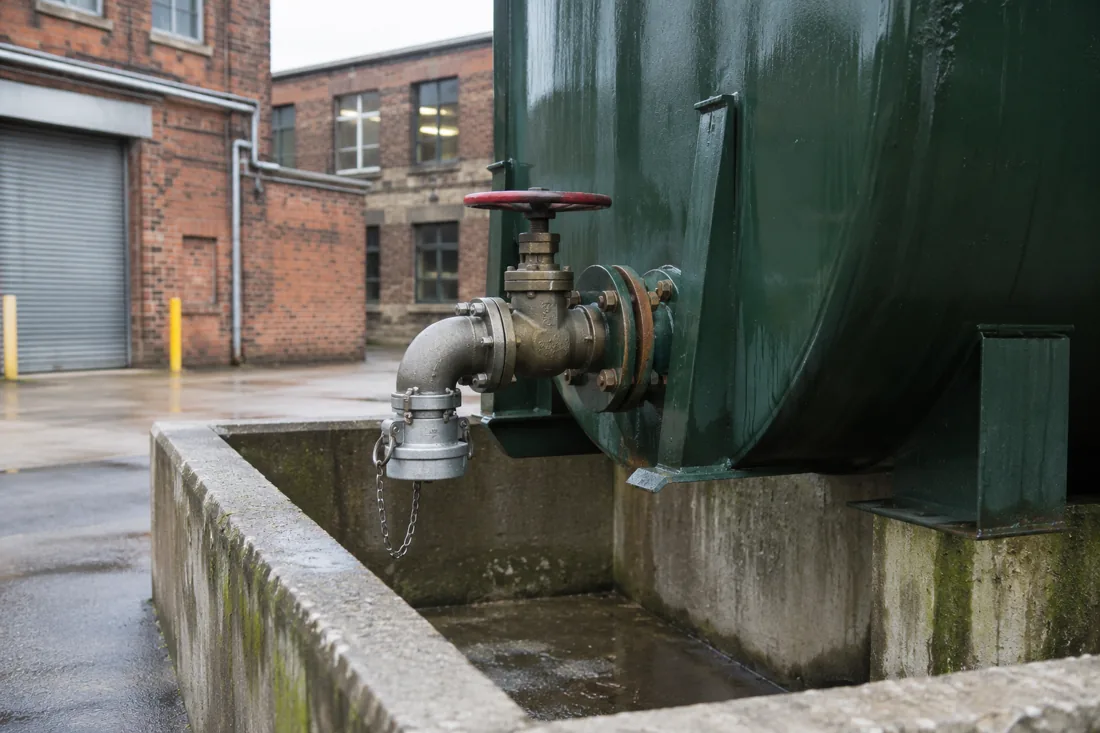
More Than Switching A Tank Off
Tank decommissioning is a controlled withdrawal from use. It addresses the contents, connections and hazards that remain after a business no longer needs the tank. A disconnected-looking vessel may still hold liquid, vapour or links to a fill point elsewhere on the premises.
The first decision is what the area will become. A cleared workshop, a redevelopment plot and a retained underground tank need different end states. Establish that requirement with the property owner and facilities contact before choosing between removal and an assessed in-place closure.
Temporary Disuse Or Permanent Closure?
A tank awaiting future use should not automatically receive the same treatment as one permanently retired. Explain the expected timescale and whether the equipment it feeds is also leaving. Long-term uncertainty is a reason to investigate the options, rather than leave an unrecorded tank behind.
Physical removal can be the clearest outcome when access permits and future works would otherwise encounter the vessel. If a tank must stay, the assessment needs to explain why and how it will be made safe. Foam filling is one possible technique, not a default answer for every redundant tank.
For buried commercial tanks, consult the relevant Environment Agency guidance and any site-specific environmental requirements. Tank history, suspected leakage and future land use may require specialist environmental advice. Closure of the vessel is a separate question from the condition of the ground around it.
Trace The Whole Fuel System
A useful survey follows the tank beyond its visible body. Record the fill and vent arrangements, pumps, gauges, supply and return lines and connected plant. Old premises can contain abandoned lines whose route is uncertain, so do not assume every nearby pipe belongs to the same installation.
Remaining product is sampled or assessed to determine whether it is usable. Fuel transfer, sludge recovery and water removal need to be planned before the vessel can be cleaned. A nominally empty tank should still be treated as containing residues until the assessment establishes otherwise.
Isolation is specialist work coordinated with the responsible site personnel. The scope should prevent unintended operation or a later delivery to a retired system. Do not disconnect lines or remove identifying labels yourself while a survey is being arranged.
Closure In An Occupied Building
At an engineering premises, decommissioning may take place beside processes that remain live. Identify the activities that cannot stop, the services that can be isolated and the person authorising permits. A heating changeover may require a different window from retirement of a standby generator tank.
The work area and transfer route need protection from normal vehicle movements. Include loading access, drains, nearby workstations and restrictions on noise or hot work. Where lifting or tank entry is involved, those operations need their own planning and controls.
HSE guidance on DSEAR addresses fire and explosion risks from dangerous substances at work. The assessment must consider the actual stored product and the proposed operation. A historical fuel label or the absence of a strong smell cannot establish that cutting or entry is safe.
Specify What The Price Covers
Decommissioning cost depends on the initial condition, volume and type of contents, connections to be retired and the final outcome. Physical removal adds handling and transport. Filling adds material and verification requirements, while underground access can introduce investigation or excavation.
Ask whether the quotation includes cleaning, fill-point retirement, redundant pipework and marking the final tank position. Make good works, contaminated land investigation and demolition of a bund should be stated separately. A cheap closure that leaves unidentified infrastructure may create another problem at the next lease or building project.
Programme allowances should follow the sequence of work rather than a promised fixed duration. Fuel recovery, cleaning, testing and final closure can involve different equipment or attendance. If other trades follow, agree a hold point before they take over the area.
A Record Future Contractors Can Use
Send the site postcode, drawings, previous contents, estimated fuel remaining and photographs of the tank and remote fill point. Include tenancy or handover requirements, known spills and future construction proposals. If the tank is underground, say how its location and dimensions were established.
The completion record should identify the tank, its location, former contents and the work actually completed. For a retained tank, record the closure method and any filling material and quantity. Where a vessel has been removed, the records should say so instead of describing it as left in place.
Waste records relate to the liquids, residues and equipment removed, with the appropriate documentation for each classification. Retain relevant safety records and updated drawings with the premises file. Share the retained-tank location with future surveyors and contractors before intrusive works begin.
Your Questions Answered
Does Decommissioning Mean The Tank Is Removed?
Tank decommissioning does not always mean physical removal. It describes taking a tank permanently out of use and addressing the remaining hazards. The agreed scope may end with removal or a justified in-place closure. The completion record should clearly distinguish those outcomes, including the location of any vessel that remains.
Can A Filled Tank Be Used Again?
A filled tank is permanently closed and cannot be returned to fuel storage as it stands. Treat future fuel storage as a new project requiring assessment, rather than planning to reopen the vessel. Tell us about possible redevelopment before deciding on filling, since a retained tank can complicate later excavation.
Planning references: HSE confined spaces, DSEAR guidance, business waste responsibilities. Requirements depend on the assessed work.